The Power of Flowers: Bioremediation in Urban Spaces
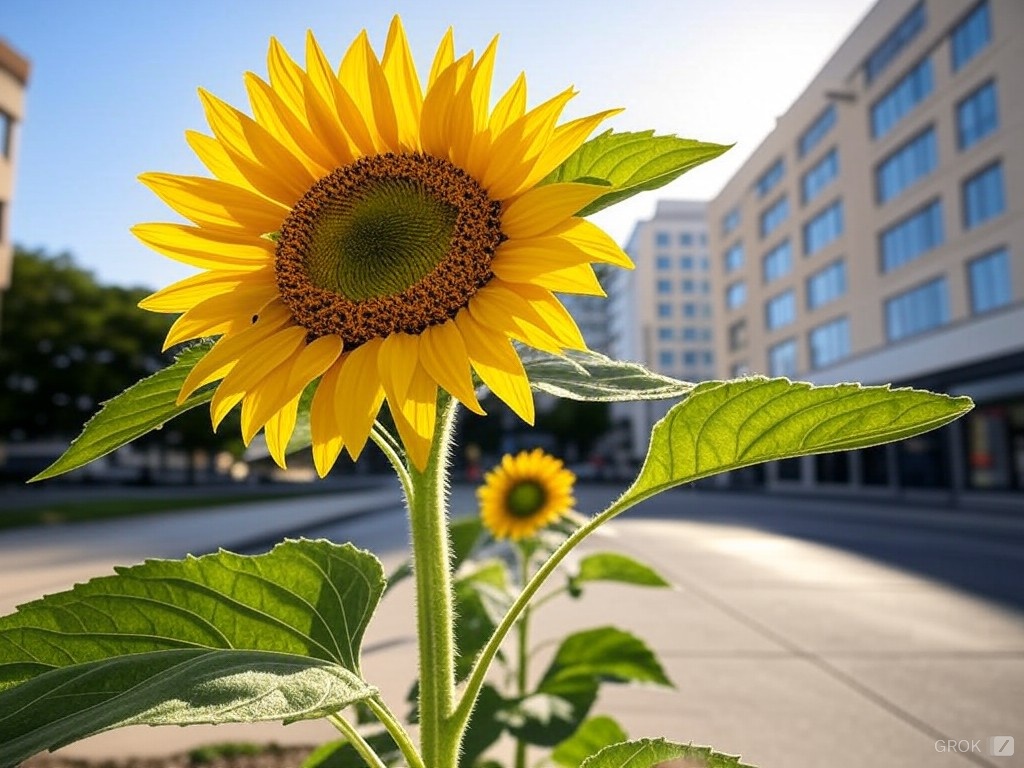
Sunflowers are a symbol of hope and renewal representing the resilience of nature and the possibility of recovery even after catastrophic events. Sunflowers have an impressive ability to absorb radioactive isotopes like cesium-137 and strontium-90 from the soil and water of the environments where they grow. These isotopes are taken up by the plant and stored in its tissues, effectively reducing the levels of radiation in the environment. Because of this sunflowers, have been used to help clean up radioactive contaminants after nuclear disasters such as the Chernobyl disaster of 1986.
Sunflowers and Heavy Metals
Sunflower is considered the most ideal plant for phytoremediation of heavy metals because of its greater potential for heavy metal uptake and tolerance. Sunflowers are considered “hyperaccumulators” of the heavy metals nickel, copper, arsenic, lead, and cadmium because of the high concentrations of metal contaminants that they accumulate from the environments where they are grown. This is particularly useful in urban areas with soil contamination from industrial activities and vehicle emissions.
Blooming Opportunities: An Overview of the Sunflower Industry
The sunflower farm industry is a significant agricultural sector with a global presence. Sunflowers are cultivated in over 80 countries, with the largest acreage in Russia, Ukraine, Argentina, Turkey, and Romania. In the United States, sunflowers are grown mainly in North and South Dakota, with significant acreage in Minnesota, Colorado, California, Nebraska, Texas, and Kansas. In 2023, the global sunflower seeds market reached approximately USD 29.12 billion and is projected to grow at a CAGR of 3.4% from 2024 to 2032, reaching around USD 39.29 billion.
Sunflowers not only help to cleanse the environment of heavy metals and toxic substances but also contribute to the biodiversity and beauty of the areas they rehabilitate. By integrating sunflower bioremediation into our environmental management strategies, we can harness the power of nature to restore polluted sites and pave the way for a healthier, greener future.
Sources and Related Content
- https://www.cbc.ca/news/canada/calgary/high-river-planting-sunflowers-to-purify-soil-from-flood-toxins-1.2643453
- https://pmc.ncbi.nlm.nih.gov/articles/PMC5402931/
- https://www.ua-magazine.com/2022/03/27/sunflowers-cleaners-of-nuclear-disasters/
- https://www.un.org/en/observances/chernobyl-remembrance-day/background
- https://nature.berkeley.edu/blackmanlab/Blackman_Lab/Lab_News/Entries/2013/2/18_Bloom_of_the_Week_-_Phytoremediation_with_Sunflower.html
- https://www.history.com/topics/1980s/chernobyl
- https://www.nrc.gov/reading-rm/doc-collections/fact-sheets/chernobyl-bg.html
- https://www.scirp.org/journal/paperinformation?paperid=126260#:~:text=Sunflower%20is%20one%20of%20the,uptake%20and%20tolerance%20%5B18%5D%20.
- https://pmc.ncbi.nlm.nih.gov/articles/PMC5402931/
- https://www.kickstarter.com/projects/heavymetal/heavy-metal-magazine-1
- https://www.youtube.com/watch?v=uAyVcR17COs
- https://www.agmrc.org/commodities-products/grains-oilseeds/sunflower-profile?form=MG0AV3
- https://www.expertmarketresearch.com/reports/sunflower-seeds-market?form=MG0AV3
- https://www.youtube.com/watch?v=NiWtC54SVso
- https://www.vangoghmuseum.nl/en/stories/the-painter-of-sunflowers#13
 Actionable Results
Leave a comment